Start with the requirement, not the alloy number
7075 is stronger than 6061. That single fact answers fewer questions than it appears to, because most parts are not limited by strength. A bracket may be limited by how it is welded, a cover by how it forms, an outdoor housing by corrosion exposure, a machined plate by cost and lead time. Decide which requirement actually constrains your part, then compare the two alloys against it.
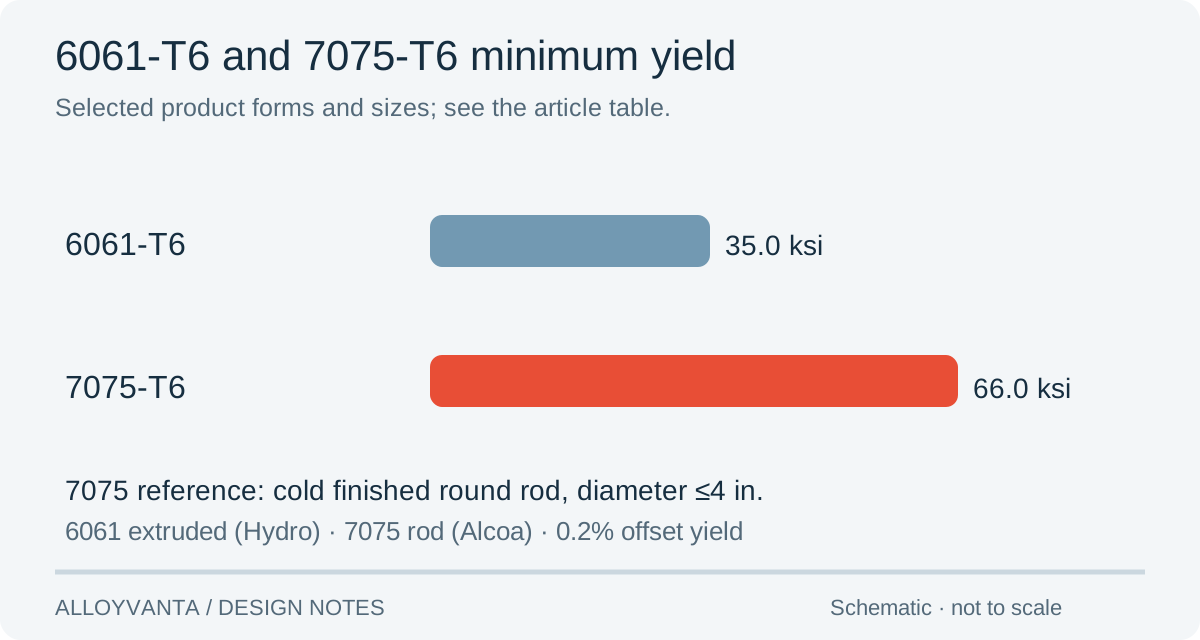
Both figures below come from manufacturer datasheets, and the two datasheets describe different product forms: the 6061 values are for extruded material, the 7075 values for cold finished rod and bar. Read them as published references for planning, not as a like-for-like laboratory comparison of the two alloys. Always confirm the values for the form and temper you are actually buying.
| Property | 6061-T6 / T6511, extruded | 7075-T6 / T651, cold finished rod & bar |
|---|---|---|
| Size scope for the strength values | Extruded sections; elongation depends on thickness below | Round rod ≤4.000 in diameter; square, hexagonal or octagonal bar ≤3.5 in thickness; rectangular bar ≤3 in thickness |
| Ultimate tensile strength, minimum | 38.0 ksi (260 MPa) | 77.0 ksi |
| Yield strength, 0.2% offset, minimum | 35.0 ksi (240 MPa) | 66.0 ksi |
| Elongation, minimum | 8% (≤0.249 in) or 10% (≥0.250 in) | 7%, where the datasheet requires an elongation test |
| Brinell hardness, typical | Not stated in this datasheet | 150 |
| Ultimate shear strength, typical | Not stated in this datasheet | 48 ksi |
| Electrical conductivity, typical | 43% IACS | 33% IACS |
The 7075 strength values apply only to the size range shown. For T651 round rod, Alcoa lists lower minimum tensile/yield values of 75/64 ksi at 4.001–6.000 in and 73/62 ksi at 6.001–7.000 in. Hardness, shear strength and conductivity are typical values, not minimum acceptance limits. Check the full datasheet and the purchasing specification for the actual product.
Note the elongation row. The stronger alloy is also the less ductile one here, which matters as soon as a part has to be formed rather than cut. A number being absent from a datasheet is information too: it means that producer did not publish it for that form, not that the property is unknown to the industry.
Match the alloy to how the part is made and used
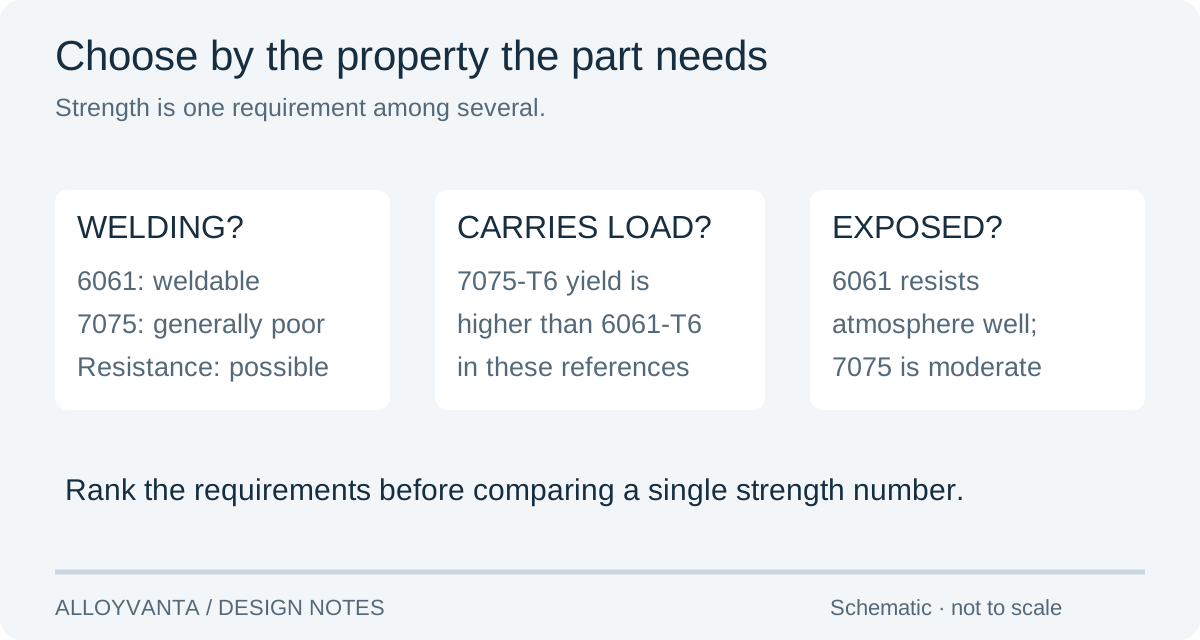
The producers' own qualitative ratings are often more decisive than the strength table. Hydro rates 7075 as a poor choice for welding, though it can be joined by resistance welding. Its 6061 datasheet describes that alloy as easily welded — with the important qualification that -T6 strength can be reduced in the weld region, so a welded joint is not automatically as strong as the parent material.
On machinability, both are workable but differently. Hydro rates 7075 “B” on the Aluminum Association's A-to-F scale, and the Alcoa datasheet gives 7075-T6 the same “B” rating. The Hydro 6061 datasheet describes adequate machinability while noting the chips are difficult to break, with chip breakers and peck drilling recommended. Neither alloy is a problem to machine; they simply need different tooling decisions.
For corrosion, Hydro describes 7075 as having good anodizing response but flags galvanic corrosion as a concern, and the Alcoa datasheet notes that the -T73 and -T7351 tempers offer better resistance to stress-corrosion cracking than -T6. If your part is loaded and exposed, that temper question deserves its own answer rather than being folded into the alloy choice. Temper availability is confirmed for each project.
Specify the alloy, the temper and the form
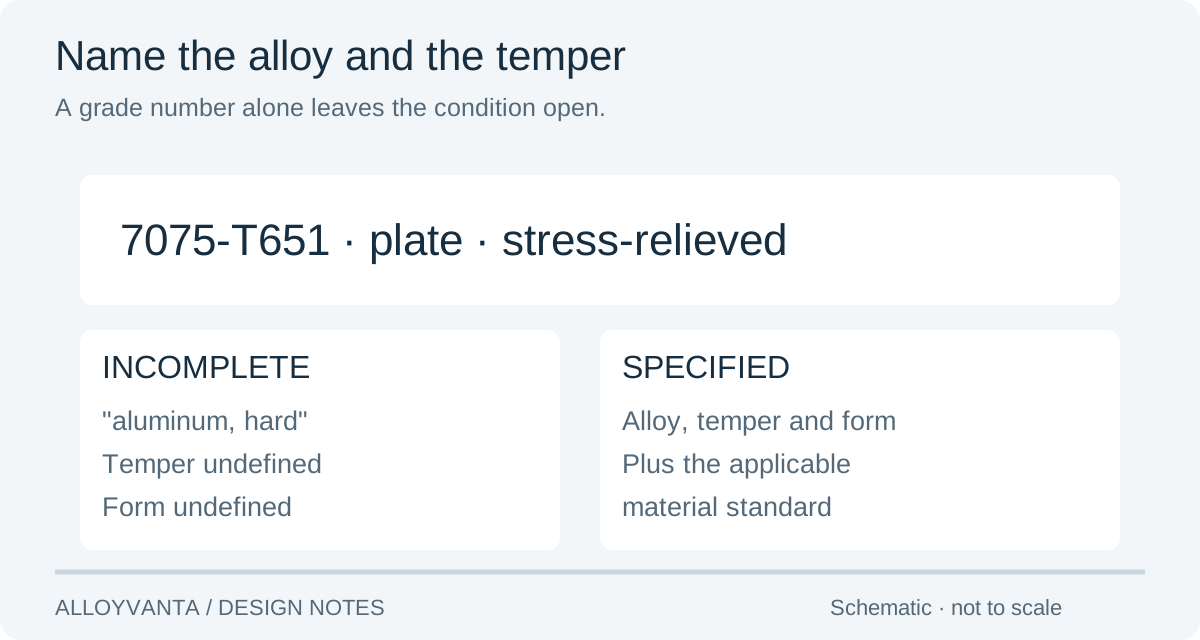
“Aluminum, strong” is not a specification, and neither is a bare grade number. The temper decides most of the properties in the table above, and the product form decides which published values apply at all. Our aluminum reference lists 6061-T6, 6082-T6 and 7075-T6 as starting points for enquiries; state the material standard as well if your project requires one.
| Question | What it decides | What to put in the enquiry |
|---|---|---|
| Is the part welded? | Often rules 7075 out before strength is considered | The joining method and whether joint strength is critical |
| Is it formed or folded? | Elongation and temper matter more than tensile strength | The bend geometry and the finished direction |
| Is it loaded in service? | Whether the yield figure is actually the constraint | The duty, and which features carry the load |
| Is it exposed? | Corrosion route, temper and finish together | Environment, plus contact with dissimilar metals |
| Which form is available? | Which published datasheet values apply | Plate, bar, extrusion or sheet |
If cost and availability are the real constraint, say so. 6061 is the more commonly stocked of the two and often the more straightforward to buy in a given form, which can matter more to a delivery date than a strength margin the part never uses.
Carry the decision into the manufacturing route
Once the alloy is settled, the geometry decides the route. Pockets, mounting patterns and contoured faces go to CNC milling; diameters, bores and threads to CNC turning; parts with faces at an angle to one another may be reviewed for the partner-coordinated five-axis route. The machining overview explains how that choice is made across the available processes.
Plan the finish with the alloy rather than after it. Anodizing adds thickness, so identify the dimensions that must hold after finishing and the faces that are visible — the anodizing reference covers what belongs in that specification. Where a surface has a functional requirement rather than a cosmetic one, state it as a parameter and a limit using the surface roughness reference.
For sheet parts, the comparison that usually matters is a different one: see 5052 vs 6061 for folded covers and enclosures.
Frequently asked questions
Is 7075 always the better choice for a strong part?
No. It is stronger in the published references, but it is rated a poor choice for welding, is less ductile and is more exposed to stress-corrosion concerns in the -T6 temper. Choose it when strength is the actual constraint and the part is neither welded nor formed.
Can I substitute 7075 for 6061 in an existing drawing?
Treat it as a design change, not a material swap. Welding, forming, finishing and corrosion behaviour all differ, so the drawing requirements and the joining method need to be reviewed before the substitution is approved.
Why do published values differ between suppliers?
Datasheets are published per product form, temper and thickness range, and each producer states values for the material it supplies. Compare like forms, and confirm the figures for the material actually being bought.
Technical references
- Hydro — 6061 extruded aluminum alloy data sheet (2019): tensile, yield, elongation, conductivity, welding and machinability notes
- Alcoa Mill Products — Alloy 7075 data sheet: tensile, yield, elongation, hardness, shear, conductivity and temper notes
- Hydro — 7075 aluminum alloy: machinability rating, weldability and corrosion notes
Method. Property values are quoted from the manufacturer datasheets listed above, in the units each producer publishes, for the product form and temper stated in the table. The two datasheets cover different product forms and are not a like-for-like comparison. Diagrams are schematic teaching illustrations. Alloyvanta does not publish its own measured material test results.