Aluminum
A useful starting point for lightweight housings, brackets and machined components.
SURFACE FINISHING
Retains the surface left by the cutting process.
The starting surface
Visible tool paths can remain. Mark burr-sensitive edges and cosmetic faces; use a drawing callout when a particular surface roughness matters.
Discuss this finish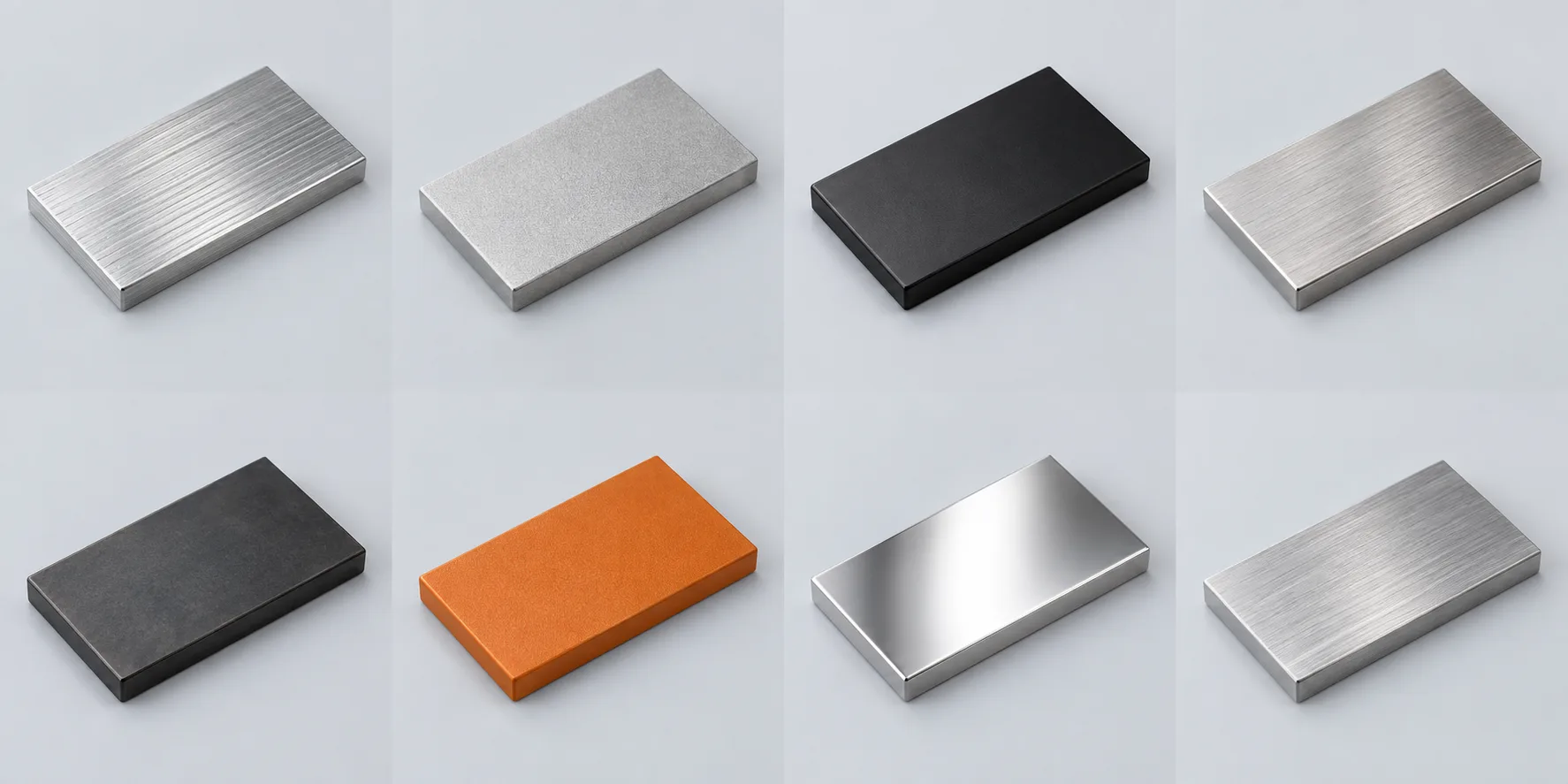
A useful starting point for lightweight housings, brackets and machined components.
Consider stainless steel when corrosion exposure and cleanable surfaces matter.
A material family for general mechanical parts where strength and cost need to be balanced.
Compare alloy steels for components with demanding mechanical requirements.
A copper alloy family used for turned fittings, small components and decorative details.
Consider copper for parts where electrical or thermal performance is central.
Evaluate titanium when the application needs a particular combination of weight, strength and corrosion resistance.
Compatibility depends on the specific grade, geometry and treatment specification. Final selection is reviewed with the project.
Identify visible surfaces, masking areas, contact points and fits. State whether your dimensional requirements apply to the finished part.
Read the finish checklistSelect a process specification and acceptance reference; appearance illustrations do not establish coating thickness, corrosion performance or conformity.
| Finish | Material families to review | Requirement to specify | Features to review |
|---|---|---|---|
| As Machined | Aluminum, Stainless Steel, Carbon Steel, Alloy Steel, Brass, Copper, Titanium | The starting surface | Visible tool paths can remain. Mark burr-sensitive edges and cosmetic faces; use a drawing callout when a particular surface roughness matters. |
LET’S MAKE IT TANGIBLE
Bring a drawing. Bring a sketch. Start the conversation.